
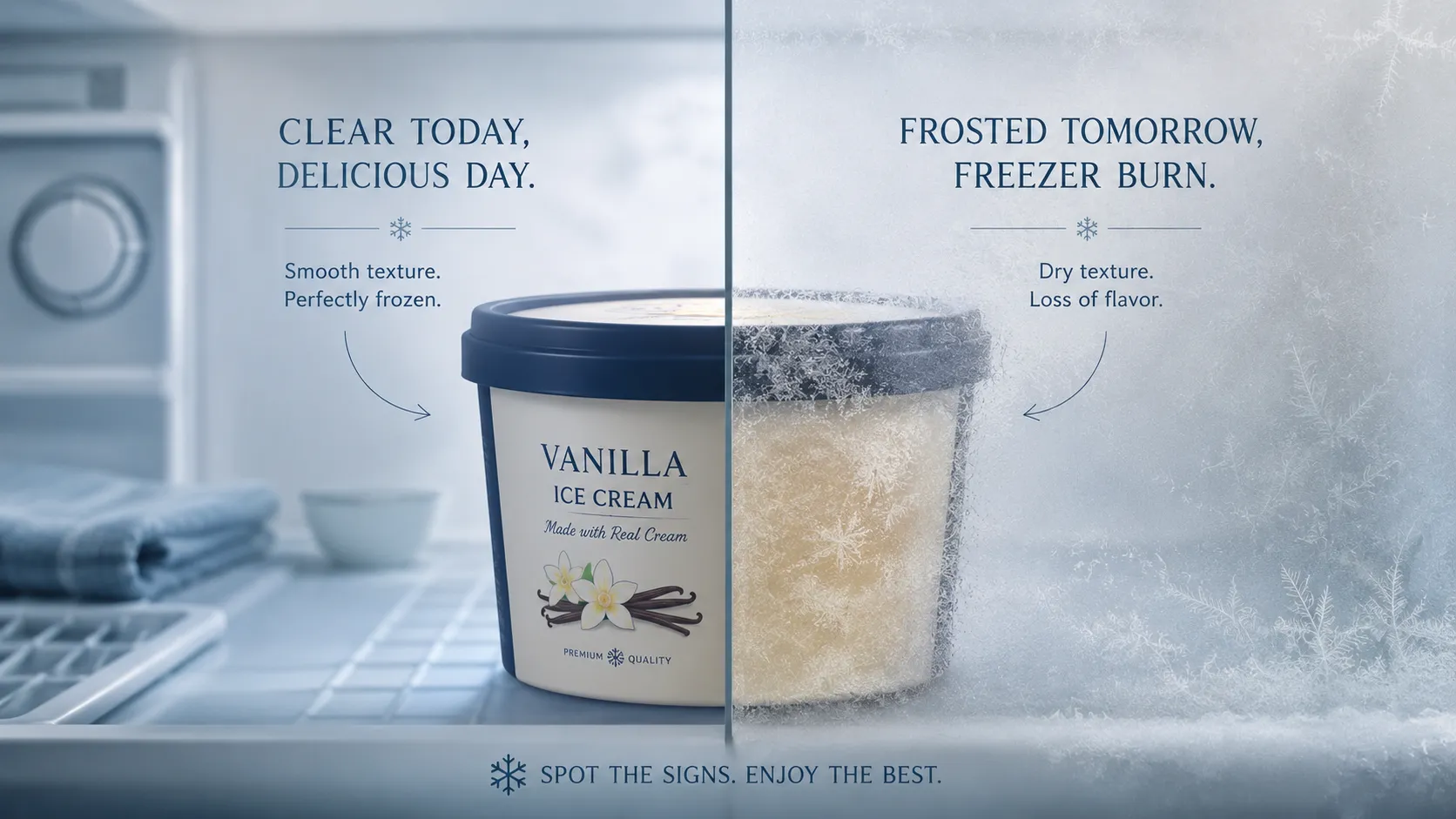
Ice cream is one of those treats that people expect to be perfect every time they open the freezer. You imagine a smooth, creamy scoop melting slowly on your tongue, only to discover a layer of crunchy ice crystals sitting on top. Suddenly, that premium pint doesn’t seem nearly as appealing. This disappointing experience is usually caused by freezer burn, a common problem that affects frozen foods and especially ice cream.
Many people assume freezer-burned ice cream has spoiled and should immediately be thrown away. Others scrape away the icy layer and continue eating without giving it much thought. The truth sits somewhere in the middle. Freezer burn doesn’t necessarily make ice cream dangerous, but it can dramatically reduce the quality, texture, and flavor that make ice cream enjoyable in the first place. According to food safety guidance from the USDA, freezer burn is primarily a quality issue caused by air exposure and moisture loss rather than bacterial contamination. Understanding how to recognize freezer burn, why it happens, and how to prevent it can save money and reduce food waste. Whether you buy premium artisan pints, family-size tubs, or homemade frozen desserts, learning these signs helps you enjoy ice cream at its best. This guide explores everything from visible ice crystals to subtle texture changes so you can easily tell when your favorite frozen treat has been affected.
Understanding Freezer Burn in Ice Cream
What Freezer Burn Actually Means
Freezer burn occurs when moisture escapes from frozen food and is replaced by air. In ice cream, this process causes water molecules to migrate toward the surface where they form visible ice crystals. Scientists describe part of this process as sublimation, where frozen water transitions directly from solid ice into vapor before refreezing elsewhere. The result is a product that becomes increasingly dry, icy, and less appealing over time. Think of freezer burn as the frozen-food equivalent of bread going stale. The food remains technically edible, but it loses many of the characteristics that made it enjoyable. Ice cream depends heavily on a delicate balance of water, fat, sugar, and air. When that balance is disrupted, the texture changes dramatically.
One reason freezer burn is so noticeable in ice cream is that people consume it exactly as it comes from the freezer. Unlike meats or vegetables that can be cooked and transformed, ice cream’s texture is part of the experience. Even small amounts of crystal formation can create a noticeably rough mouthfeel. Experts note that freezer-burned ice cream often loses its signature creaminess and develops a coarse texture that cannot be fully restored.
Why Ice Cream Is Especially Vulnerable
Ice cream contains a significant amount of water. Every time the product experiences slight warming and refreezing, tiny ice crystals can grow larger. Frequent freezer-door openings, transportation from the grocery store, and improper storage accelerate this process.
Commercial ice cream manufacturers use stabilizers to help preserve texture, but even premium brands are vulnerable. Once a container has been opened, the protective environment inside changes. Air enters, moisture escapes, and crystal formation becomes much more likely. The more frequently the container is opened, the greater the risk becomes.
What Freezer Burn Looks Like in Ice Cream
Surface Ice Crystals and Frost
The easiest way to identify freezer burn is by looking for visible ice crystals on the surface. These crystals often appear as shiny, frosty patches covering the top layer of the ice cream. Sometimes they resemble freshly fallen snow. Other times they form a thick, uneven crust that looks distinctly different from the smooth surface the ice cream originally had.
The crystals may be small and scattered or large and dense. Their size often reflects how long the freezer burn process has been occurring. Small crystals suggest early-stage damage, while thick layers indicate prolonged exposure to air or repeated temperature fluctuations.
Many consumers mistake these crystals for harmless frost. While frost and freezer burn are closely related, extensive crystal buildup is usually a sign that moisture has migrated and refrozen. This means the texture beneath the surface has likely changed as well. Food experts consistently identify ice crystal accumulation as one of the strongest visual indicators of freezer burn.
Changes in Color and Appearance
Freezer-burned ice cream may also develop a dull appearance. Instead of looking rich and creamy, the surface can appear faded or chalky. In vanilla ice cream, the change may be subtle. In chocolate or brightly colored flavors, the difference can be more obvious.
Sometimes small pockets or depressions appear where moisture has escaped. These areas may look dry or shrunken compared to the surrounding ice cream. Although discoloration is more common in meats and produce, frozen desserts can still exhibit visual signs of dehydration.
Signs Inside the Container
The container itself often provides clues. Large crystals attached to the lid or sides suggest repeated melting and refreezing cycles. If you notice thick frost lining the inside walls, chances are the ice cream has been exposed to air for an extended period.
Pay attention to uneven surfaces, frozen ridges, and icy chunks. These signs indicate structural changes inside the product. A perfectly stored container should remain relatively smooth, even after multiple servings.
Temperature Fluctuations
Temperature changes are the leading cause of crystal growth. Every time ice cream partially softens and then refreezes, small crystals merge into larger ones.
Even opening the freezer door repeatedly contributes to this process. Warm air enters, temperatures rise slightly, and microscopic melting occurs. When the freezer cools again, the melted water refreezes into larger crystals. Over weeks and months, these cycles accumulate significant damage.
Air Exposure After Opening
Air is another major culprit. Once the seal is broken, moisture begins escaping from the ice cream’s surface. That moisture eventually refreezes elsewhere in the container, creating frost and crystal buildup.
A partially empty container is particularly vulnerable because it contains more air space. The larger the empty space above the ice cream, the greater the opportunity for moisture movement and freezer burn development.
Refreezing and Heat Shock
Ice cream experts often use the term “heat shock” to describe repeated warming and cooling cycles. Heat shock accelerates crystal growth and causes ingredients to separate.
This can happen during transportation from the store, power outages, malfunctioning freezers, or simply leaving ice cream on the counter too long before returning it to storage. Once heat shock occurs, the original texture is difficult to restore.
Distinguishing Freezer Burn from Normal Hardening
Normal Frozen Texture
Not every hard container of ice cream is freezer burned. Fresh ice cream stored at proper temperatures naturally becomes firm. Hardness alone is not evidence of damage.
In fact, premium ice cream often feels denser because it contains less incorporated air. A firm texture can simply indicate that the freezer is operating efficiently.
Indicators of Actual Freezer Burn
The key difference lies in the presence of visible crystals, dryness, and texture degradation. Freezer-burned ice cream typically exhibits several symptoms simultaneously rather than just increased firmness.
Look for:
| Normal Hardening | Freezer Burn |
|---|---|
| Smooth surface | Frosty surface |
| Uniform texture | Grainy texture |
| Consistent color | Dull appearance |
| Creamy mouthfeel | Crunchy crystals |
| Firm but smooth | Hard and icy |
When multiple freezer burn indicators appear together, the diagnosis becomes much more certain.
Quick Visual Comparison
A helpful rule of thumb is to compare the surface with a newly opened container. Fresh ice cream generally appears smooth and slightly glossy. Freezer-burned ice cream often resembles packed snow, with visible crystalline structures reflecting light.
This simple comparison can help consumers quickly distinguish between harmless hardening and genuine quality deterioration.
Can Freezer-Burned Ice Cream Still Be Safely Eaten
Food Safety Considerations
The good news is that freezer burn itself does not make ice cream unsafe. Food safety authorities consistently state that freezer burn is primarily a quality issue rather than a health hazard. When foods remain continuously frozen at proper temperatures, harmful bacterial growth is effectively halted. If the ice cream has merely developed crystals and texture changes, it is generally safe to consume. Many people simply scrape away the heavily affected layer and enjoy the remaining product.
Safety becomes more complicated if the ice cream has completely melted and remained warm for extended periods before refreezing. In those situations, freezer burn may not be the primary concern. Instead, potential spoilage and food safety issues deserve attention.
When You Should Throw It Away
There are situations where disposal makes sense. Consider discarding ice cream if you notice:
- Sour or unusual odors
- Signs of contamination
- Significant discoloration
- Evidence of prolonged thawing
- Severe texture deterioration throughout the entire container

Dorian Kade is a 33-year-old American content writer based in Spokane, Washington. With years of experience creating well-researched articles on lifestyle, home improvement, and digital publishing, he focuses on producing accurate, reader-friendly content backed by reliable sources and practical knowledge. His writing reflects a commitment to clarity, trustworthiness, and helpful information, and he regularly contributes editorial content for candydelights.xyz while staying connected to trends that matter to modern readers.