
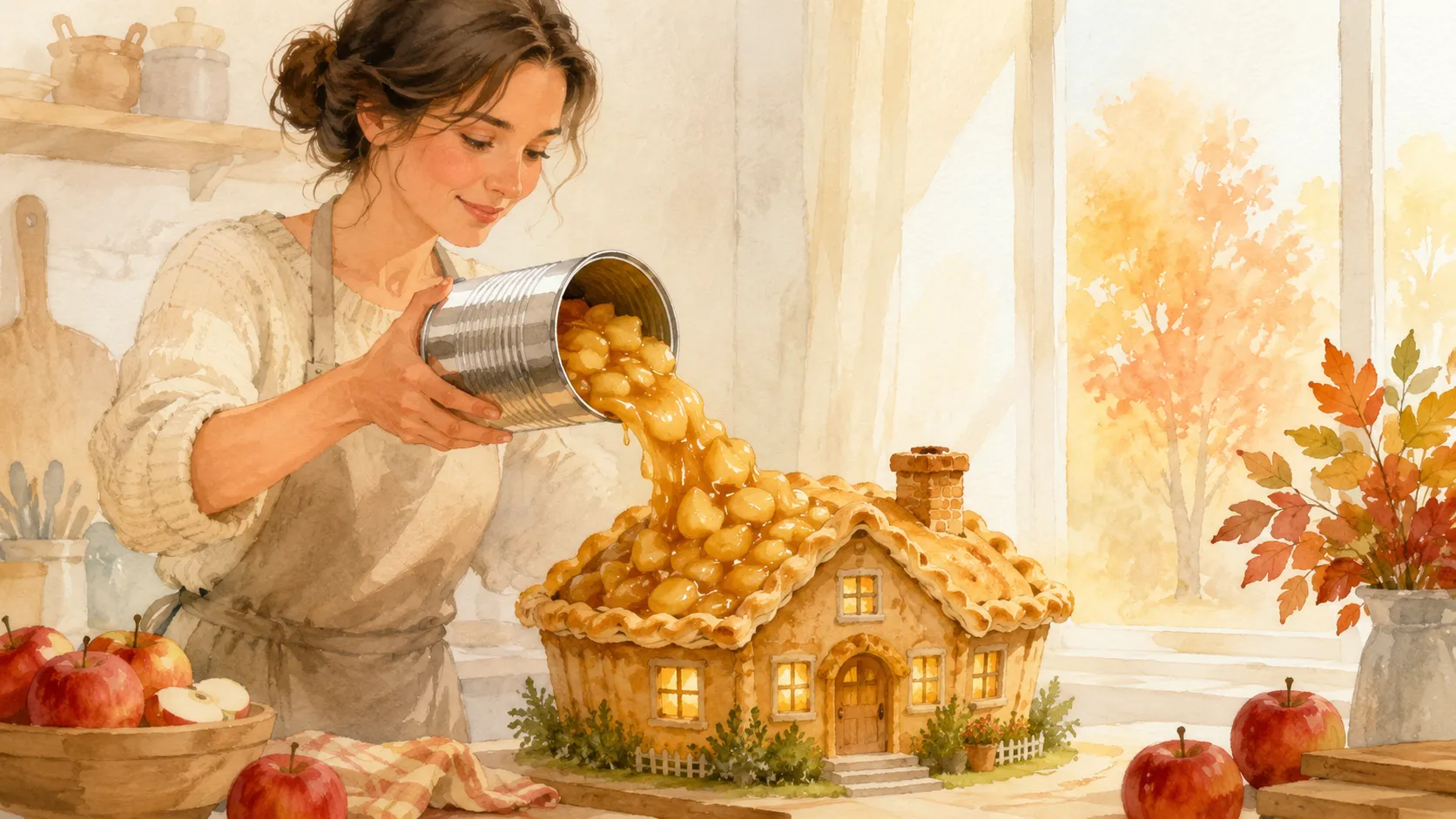
Before diving into the article, recent baking sources consistently recommend baking apple pies until the filling is actively bubbling and the crust is deeply golden brown. Many baking guides also suggest starting at a higher oven temperature and then lowering it to help create a crisp bottom crust while fully cooking the filling. Cooling the pie for at least 2–4 hours is commonly recommended for cleaner slices.
Why Canned Apple Pie Filling Is a Smart Shortcut
Making apple pie from scratch can be incredibly rewarding, but it can also be time-consuming. Peeling, coring, slicing, seasoning, and cooking apples often takes longer than the actual baking process. That is exactly why canned apple pie filling has become a favorite solution for busy home bakers. It provides consistency, convenience, and dependable results without requiring extensive preparation. Whether you’re baking for a family dinner, holiday gathering, or weekend treat, canned filling helps you get a delicious pie on the table with much less effort.
The biggest advantage is predictability. The apples are already softened, sweetened, and thickened, which removes much of the guesswork. Beginners especially benefit because they don’t need to worry about choosing apple varieties or balancing sugar levels. Still, convenience doesn’t mean settling for average results. With a few simple enhancements, canned filling can taste remarkably close to a homemade version. The secret lies in understanding how to improve flavor, texture, and crust quality while allowing the filling to remain the helpful shortcut it was designed to be.
Benefits of Using Prepared Filling
Prepared filling eliminates several common baking challenges. Since the apples are already cooked to a certain degree, the risk of undercooked fruit is greatly reduced. The filling also contains thickening agents that help prevent an overly runny pie.
Common Mistakes to Avoid
Many bakers simply open the can and pour the contents directly into the crust. While this works, it often produces a pie that tastes overly sweet or one-dimensional. Another common mistake is underbaking the crust because the filling already appears finished. Remember, even though the filling is prepared, the crust still needs enough heat to become crisp and golden.
Selecting the Right Pie Crust for the Job
The crust is the foundation of any successful apple pie. Even the most flavorful filling cannot compensate for a soggy or bland crust. Choosing the right crust affects texture, appearance, and overall eating experience. Fortunately, you have excellent options whether you prefer homemade dough or a convenient store-bought version.
Store-bought refrigerated crusts have improved dramatically over the years. They save time and offer reliable results for home bakers who want simplicity. Homemade crusts, on the other hand, provide greater control over flavor and texture. Many bakers appreciate the rich buttery taste and flaky layers that homemade dough can deliver. The decision often comes down to available time and personal preference rather than quality alone.
Homemade vs Store-Bought Crust
| Feature | Homemade Crust | Store-Bought Crust |
|---|---|---|
| Preparation Time | Longer | Minimal |
| Customization | High | Limited |
| Convenience | Lower | High |
| Consistency | Depends on skill | Reliable |
| Flavor Potential | Excellent | Good |
Professional bakers frequently emphasize keeping pie dough cold. Cold butter creates steam during baking, which helps produce the flaky layers everyone loves. Experts also note that warm dough often results in dense or greasy crusts.
Choosing Between Double Crust and Lattice Designs
A double crust creates a classic appearance and helps trap moisture inside the pie. Lattice tops provide a beautiful presentation while allowing steam to escape. If you enjoy decorative baking, a lattice crust adds visual appeal and creates crisp edges that many people find irresistible.
Essential Ingredients for a Better Apple Pie
While canned filling does much of the work, a handful of additional ingredients can elevate the pie dramatically. Think of these ingredients as supporting actors that help the apples shine rather than overpower them. The goal is to create depth and complexity without making the recipe difficult.
Fresh lemon juice is one of the most effective upgrades. It brightens the filling and balances sweetness. Cinnamon remains the traditional favorite spice, but nutmeg, allspice, and cloves can add warmth and richness. Vanilla extract introduces a subtle bakery-style aroma that makes the pie feel homemade.
Core Ingredients
- 1 prepared pie crust (top and bottom)
- 2 cans apple pie filling
- 1 egg for egg wash
- 1 tablespoon milk or water
Flavor-Boosting Additions
- Lemon juice
- Cinnamon
- Nutmeg
- Vanilla extract
- Brown sugar
- Small amount of butter
These simple additions transform a standard canned filling into something far more memorable.
Ways to Enhance Store-Bought Pie Filling
The quickest route to a better pie is improving the filling before it reaches the crust. Store-bought fillings are designed for mass appeal, which means they often lean heavily toward sweetness. A few adjustments can create a more balanced and authentic flavor profile.
Adding Fresh Apples for Texture
One of the best upgrades is adding a fresh tart apple. Thin slices of apples such as Granny Smith contribute texture and freshness while helping offset the softness of canned fruit. Recent baking guides recommend this approach because it creates a more homemade mouthfeel. Fresh apples also introduce subtle tartness that balances sugary filling. The result is a pie that tastes less processed and more like it came from a family recipe passed down through generations.
Using Spices, Citrus, and Vanilla
Spices provide personality. Cinnamon is the star, but combining it with nutmeg creates greater complexity. Lemon juice brightens flavors, while vanilla rounds out sharp edges and adds warmth. Together, these ingredients create layers that make each bite more interesting than the last.
Building Layers of Flavor Before Baking
Great pies rarely depend on a single ingredient. Instead, they develop flavor through multiple complementary elements working together. Building layers means considering sweetness, acidity, spice, texture, and aroma as interconnected parts of the final dessert.
Imagine an orchestra. The apples may be the lead instrument, but supporting ingredients provide harmony. Lemon juice sharpens flavors, spices add warmth, butter contributes richness, and vanilla introduces depth. None should dominate the others.
Balancing Sweetness and Acidity
Acidity is especially important when using canned filling. Without it, the pie can become overwhelmingly sweet. A tablespoon of lemon juice often provides enough contrast to keep flavors vibrant and lively.
Creating a Homemade Taste
Small additions make a significant difference. A little brown sugar adds caramel notes. A few pieces of butter scattered across the filling melt during baking and contribute richness. These subtle touches help create the impression of a pie made entirely from scratch.
Assembling the Perfect Apple Pie
Assembly is where everything comes together. Start by placing the bottom crust into a pie plate. Make sure the dough fits snugly without stretching. Stretching often causes shrinkage during baking.
Pour the enhanced filling into the crust and distribute it evenly. Avoid creating large mounds in the center. Even distribution promotes consistent baking and cleaner slices later. Dot the surface with butter if desired.
Preparing the Bottom Crust
Some bakers lightly dust the bottom crust with flour or a small amount of breadcrumbs. This can help absorb excess moisture and reduce sogginess. Par-baking the crust is another effective strategy frequently recommended by baking professionals.
Filling and Topping the Pie
Place the top crust over the filling or create a lattice design. Seal and crimp the edges carefully. Cut vents if using a solid top crust. These vents allow steam to escape and help prevent bubbling over.
Achieving a Golden and Crisp Crust
A beautiful crust is often what separates a good pie from a great one. Golden color signals caramelization and proper baking, while crispness provides satisfying texture. Achieving both requires attention to preparation and oven temperature.
Egg Wash Techniques
Whisk one egg with a tablespoon of milk or water. Brush it evenly across the top crust before baking. This simple step encourages browning and gives the pie a bakery-quality appearance. A light sprinkle of coarse sugar can add sparkle and crunch.
Baking Temperature Strategies
Recent baking resources consistently recommend beginning at a higher temperature before reducing the heat later. Many guides suggest starting around 425°F (220°C) and then lowering to approximately 375°F (190°C). This method helps set the bottom crust and reduces the risk of sogginess while allowing the filling to cook thoroughly.
Knowing When the Pie Is Fully Baked
One of the most common mistakes is removing the pie from the oven too early. The crust may appear done while the filling has not fully thickened. Learning the signs of doneness ensures better texture and flavor.
Visual Signs of Doneness
Look for three key indicators:
- Deep golden-brown crust
- Active bubbling through vents or lattice openings
- Firm, set appearance around the edges

Dorian Kade is a 33-year-old American content writer based in Spokane, Washington. With years of experience creating well-researched articles on lifestyle, home improvement, and digital publishing, he focuses on producing accurate, reader-friendly content backed by reliable sources and practical knowledge. His writing reflects a commitment to clarity, trustworthiness, and helpful information, and he regularly contributes editorial content for candydelights.xyz while staying connected to trends that matter to modern readers.