
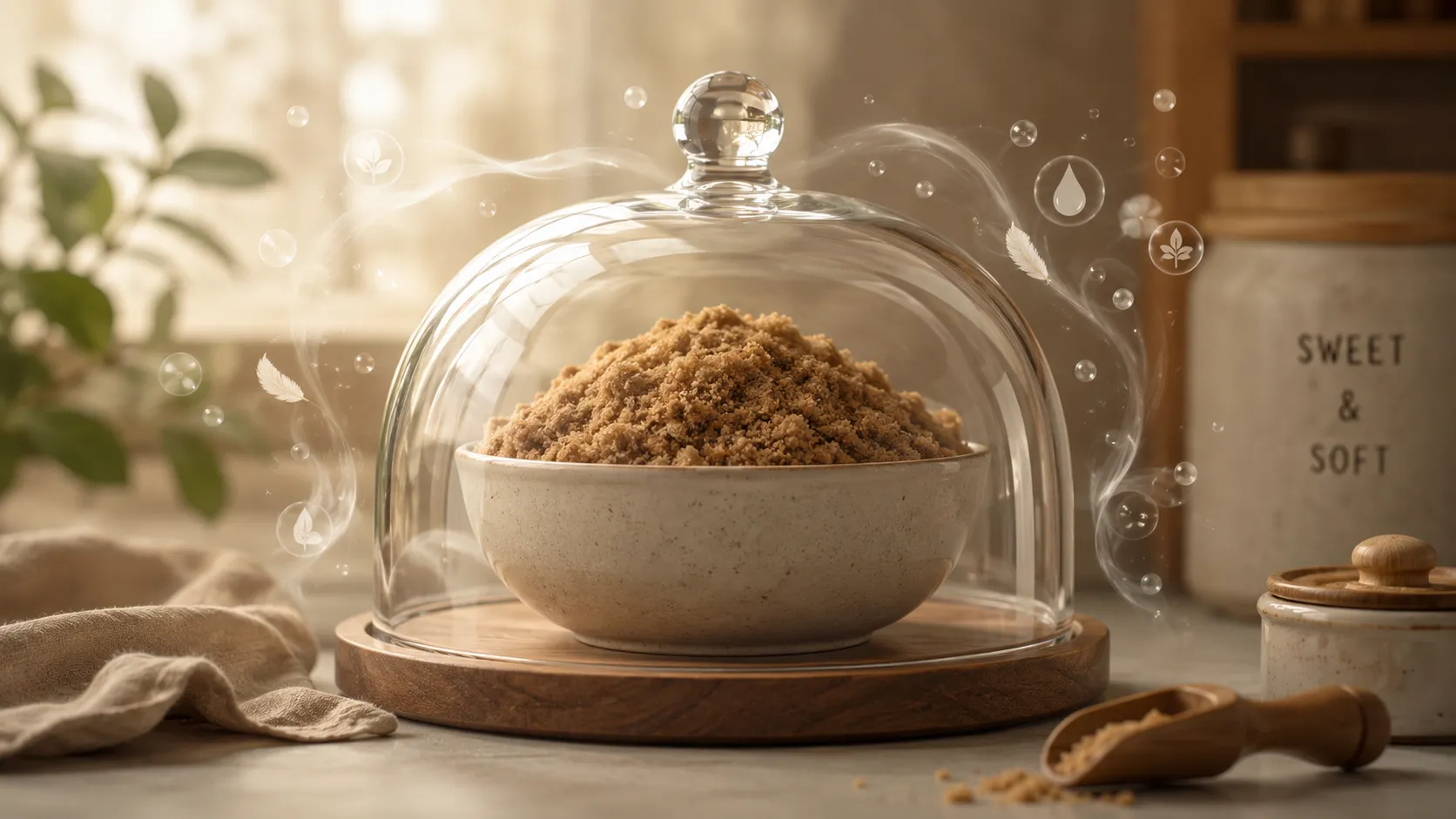
Brown sugar has a reputation for turning from a soft, fluffy baking ingredient into something that resembles a brick. One day it pours easily into your measuring cup, and the next day you’re practically looking for a hammer to break it apart. If you’ve ever opened your pantry and discovered a solid block of brown sugar right before baking cookies, cakes, or cinnamon rolls, you’re definitely not alone.
The good news is that hardened brown sugar isn’t usually spoiled. In most cases, it has simply lost moisture. Brown sugar contains molasses, which gives it its rich flavor, darker color, and soft texture. When that moisture escapes, the sugar crystals stick together and form hard clumps. The solution isn’t complicated, but it does require understanding what causes the problem and how to stop it before it starts.
Professional bakers consistently recommend airtight storage as the most effective way to maintain softness. Recent baking industry guidance highlights moisture retention as the key factor in preserving brown sugar’s texture. Experts also recommend terracotta moisture savers and properly sealed containers to keep brown sugar usable for months. This guide will walk you through why brown sugar hardens, common storage mistakes, the best containers to use, proven methods to keep it soft, and simple ways to revive it if it has already turned into a rock.
Understanding Why Brown Sugar Hardens
The Role of Molasses in Brown Sugar
Brown sugar isn’t fundamentally different from white sugar. The primary distinction is the presence of molasses. Molasses coats the sugar crystals and provides moisture, flavor, and that distinctive caramel-like taste many recipes depend on. Think of molasses as the glue that keeps brown sugar soft and slightly sticky.
Fresh brown sugar has a texture similar to damp sand. That’s because the molasses contains water. As long as that moisture remains trapped inside the sugar, it stays soft and easy to measure. The moment moisture starts escaping, the sugar crystals begin sticking tightly together. Over time, those small clumps become larger and eventually create the familiar hardened mass many home bakers encounter.
Food experts explain that the molasses content is both brown sugar’s greatest advantage and its biggest weakness. While it creates flavor and softness, it also makes brown sugar far more sensitive to air exposure than regular granulated sugar. Once the moisture evaporates, the texture changes dramatically.
How Air Exposure Causes Moisture Loss
Air is the main culprit behind hardened brown sugar. Every time a container is opened, moisture escapes and dry air enters. It’s a little like leaving a wet sponge on a countertop. Given enough time, the water evaporates and the sponge dries out.
Brown sugar behaves similarly. The moisture inside the molasses gradually evaporates when exposed to air. As this happens, the sugar crystals lose flexibility and begin locking together. Even a small gap in a container lid can accelerate this process.
Humidity levels also play a role. Homes with dry climates, air conditioning, or heating systems often experience faster moisture loss. That’s why some people find their brown sugar hardening within weeks while others can keep it soft for months. The difference often comes down to storage conditions and environmental moisture levels.
Why Brown Sugar Loses Its Soft Texture
The Science Behind Hardening
The hardening process isn’t mysterious once you understand the science. Brown sugar naturally contains moisture thanks to its molasses coating. When moisture evaporates, the sugar crystals become more exposed. These crystals bond together tightly, forming clusters that continue growing larger.
Interestingly, brown sugar can remain safe to eat for years despite becoming hard. The issue is quality, not safety. Sugar does not support significant microbial growth under normal storage conditions, meaning hardened sugar is usually still perfectly usable if softened correctly. Imagine building a sandcastle at the beach. Wet sand molds easily and holds shape. Dry sand crumbles and becomes difficult to work with. Brown sugar follows a similar principle. Moisture determines whether it remains soft and workable or becomes frustratingly solid.
Environmental Factors That Speed Up Drying
Several environmental conditions contribute to faster hardening:
| Factor | Effect on Brown Sugar |
|---|---|
| Dry indoor air | Accelerates moisture loss |
| Heat exposure | Increases evaporation |
| Poor container seals | Allows continuous airflow |
| Frequent opening | Releases trapped humidity |
| Direct sunlight | Raises temperature and drying speed |
Heat deserves special attention. Many people store brown sugar near ovens, stoves, or sunny windows without realizing the impact. Higher temperatures encourage moisture evaporation, turning soft sugar into hard chunks much faster.
Everyday Storage Mistakes That Cause Hardening
Leaving Brown Sugar in Its Original Packaging
One of the biggest mistakes is trusting the original package. Brown sugar bags and boxes are designed primarily for transportation and retail display, not long-term storage.
Once opened, these packages offer limited protection against airflow. Tiny openings allow moisture to escape continuously. Even carefully folded bags often fail to create a truly airtight seal.
Many professional bakers recommend transferring brown sugar immediately into a dedicated storage container after opening. This simple habit can dramatically extend freshness and prevent future frustration.
Frequent Opening and Poor Sealing Habits
Every time you open the container, you expose the sugar to fresh air. While occasional access isn’t harmful, leaving containers open while baking can accelerate moisture loss.
Some people scoop sugar and forget to reseal the lid immediately. Others loosely place the lid back on without checking the seal. These small habits seem harmless but can significantly shorten the lifespan of soft brown sugar.
Consistency matters. A tightly sealed container protects the moisture already present inside.
Storing Near Heat Sources
Many kitchens have warm zones that seem convenient for storage but aren’t ideal for brown sugar. Cabinets above ovens, shelves near dishwashers, and countertops exposed to sunlight all create conditions that encourage drying.
Brown sugar thrives in cool, stable environments. A pantry away from heat-producing appliances typically offers the best conditions. Keeping temperatures moderate helps preserve moisture and slows hardening.
Best Containers That Help Retain Moisture
Airtight Plastic Containers
Modern airtight plastic containers are among the most popular solutions. Containers equipped with silicone gaskets create an effective barrier against airflow and moisture loss.
The best models lock securely and maintain a stable environment inside. Many professional bakers prefer these containers because they’re lightweight, durable, and easy to access during frequent baking sessions. Recent expert recommendations consistently identify airtight containers as the most reliable defense against hardening.
Glass Jars With Tight-Fitting Lids
Glass jars provide another excellent option. Unlike some plastics, glass doesn’t absorb odors and remains highly effective at preserving moisture when paired with quality seals.
Mason jars and clamp-lid jars are especially popular. They create a nearly airtight environment while allowing easy visibility of the contents. If you’re looking for a simple and affordable storage upgrade, a quality glass jar may be all you need.
Containers With Terracotta Moisture Savers
Terracotta moisture savers have become increasingly popular among serious bakers. These small clay disks are soaked in water and placed inside the storage container.
As they slowly release moisture, they help maintain the ideal humidity level around the sugar. Several baking experts specifically recommend terracotta disks as one of the most reliable long-term solutions for preventing hardening.
Easy Methods to Keep Brown Sugar Soft Longer
Using Moisture-Retaining Accessories
Airtight storage works best when paired with moisture-retaining accessories. Common options include:
- Terracotta disks
- Brown sugar bears
- Bread slices
- Marshmallows
- Damp paper towels (used carefully)
These accessories act like miniature humidifiers inside the container. They replace moisture gradually, helping maintain the soft texture that bakers love. Marshmallows and bread slices are particularly popular because they’re inexpensive and easy to find.
Proper Pantry Placement
Storage location matters more than many people realize. A cool pantry shelf often provides ideal conditions because temperature and humidity remain relatively stable.
Avoid refrigerators whenever possible. Contrary to popular belief, refrigeration often encourages hardening rather than preventing it. Experts generally recommend room-temperature storage inside airtight containers instead.
Quick Ways to Restore Hardened Brown Sugar
Microwave Method
When you need soft brown sugar immediately, the microwave method is often the fastest solution.
Place the hardened sugar in a microwave-safe bowl and cover it with a damp paper towel. Heat in short intervals of 20 to 30 seconds, checking frequently. The moisture from the towel helps rehydrate the sugar while the heat loosens the compacted crystals.
Recent testing by food experts found microwave softening among the quickest and most effective emergency solutions.
Oven Method
For larger quantities, the oven can be highly effective.
Spread the sugar on a baking sheet and warm it at approximately 225°F to 250°F for a few minutes. Monitor carefully because excessive heat can melt the sugar rather than soften it.
This technique works well when preparing large batches of baked goods and needing several cups of sugar quickly.
Overnight Rehydration Method
If you’re not in a hurry, overnight methods often provide the best results.
Place hardened sugar in an airtight container with a moisture source such as:
- A slice of bread
- An apple slice
- A damp paper towel
- A terracotta disk

Dorian Kade is a 33-year-old American content writer based in Spokane, Washington. With years of experience creating well-researched articles on lifestyle, home improvement, and digital publishing, he focuses on producing accurate, reader-friendly content backed by reliable sources and practical knowledge. His writing reflects a commitment to clarity, trustworthiness, and helpful information, and he regularly contributes editorial content for candydelights.xyz while staying connected to trends that matter to modern readers.